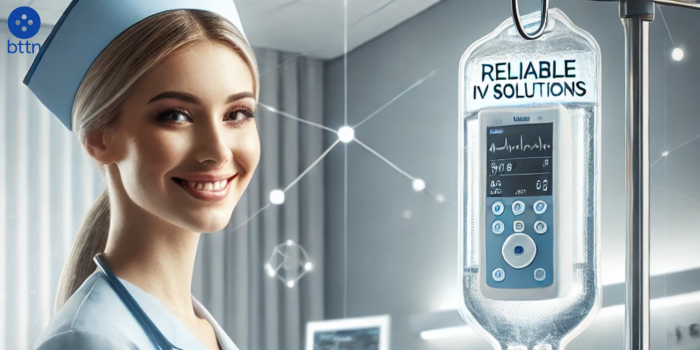
IV Solutions are key in healthcare, giving patients vital nutrients and meds. They help by putting fluids, electrolytes, and meds straight into the blood. This makes them crucial for patient care. Knowing the different IV solutions and their uses is vital for making good choices.
In the U.S., doctors use IV solutions to save lives and treat patients. They are used in emergency rooms and surgery to keep patients stable and help them heal. With more treatments happening outside the hospital, the need for good IV solutions is growing.
Introduction to IV Solutions
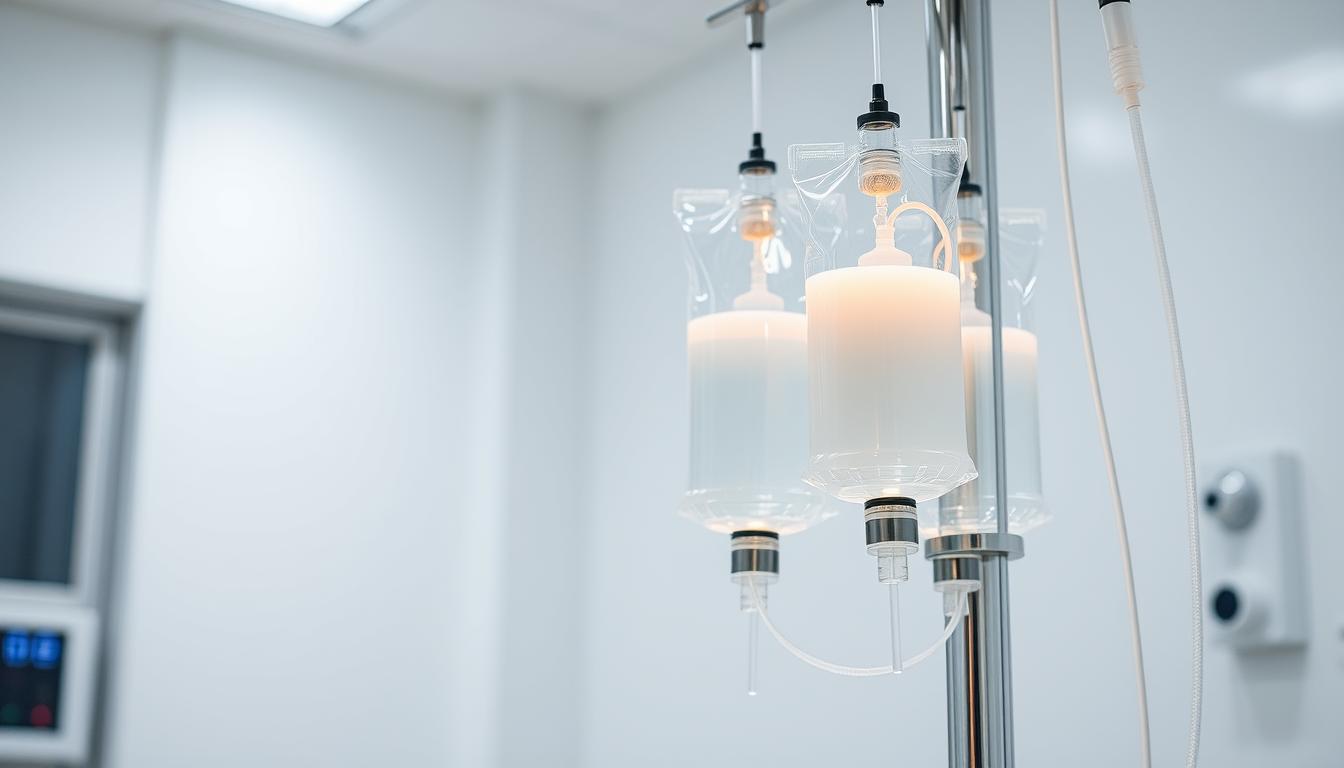
As healthcare changes, guides on IV solutions are more important than ever. Knowing about the various infusion and irrigation solutions helps doctors give better care. IV Solutions, including infusions, cater to all patients, from kids to seniors.
Key Takeaways
- IV Solutions are a critical component of patient care
- Infusion solutions are used to administer fluids, electrolytes, and medications
- Understanding the different types of IV solutions is essential for informed decision-making
- IV Solutions are used in various healthcare settings, including emergency departments and surgical suites
- Reliable IV solutions are essential for delivering life-saving treatments and medications
- Comprehensive guides to IV solutions can improve patient outcomes and care
Must Read: IV Fluids (Intravenous Fluids): Types & Uses
Understanding Medical IV Solutions and Their Applications
Medical IV solutions are key in many medical procedures. They give patients the nutrients and fluids they need. These solutions are made for different patient needs, and they're used in many ways. Irrigation solutions, for example, clean and prepare tissues for surgery or manage wounds.
There are several types of infusion solutions, like crystalloids, colloids, and parenteral nutrition. They help with dehydration, electrolyte imbalances, and nutritional needs. Irrigation solutions, such as sterile water and saline, help prevent infections and aid in healing.
Types of Infusion Solutions
- Crystalloids: used to treat dehydration and electrolyte imbalances
- Colloids: used to treat shock and hemorrhage
- Parenteral nutrition: used to provide essential nutrients to patients who cannot eat or digest food
Irrigation Solution Classifications
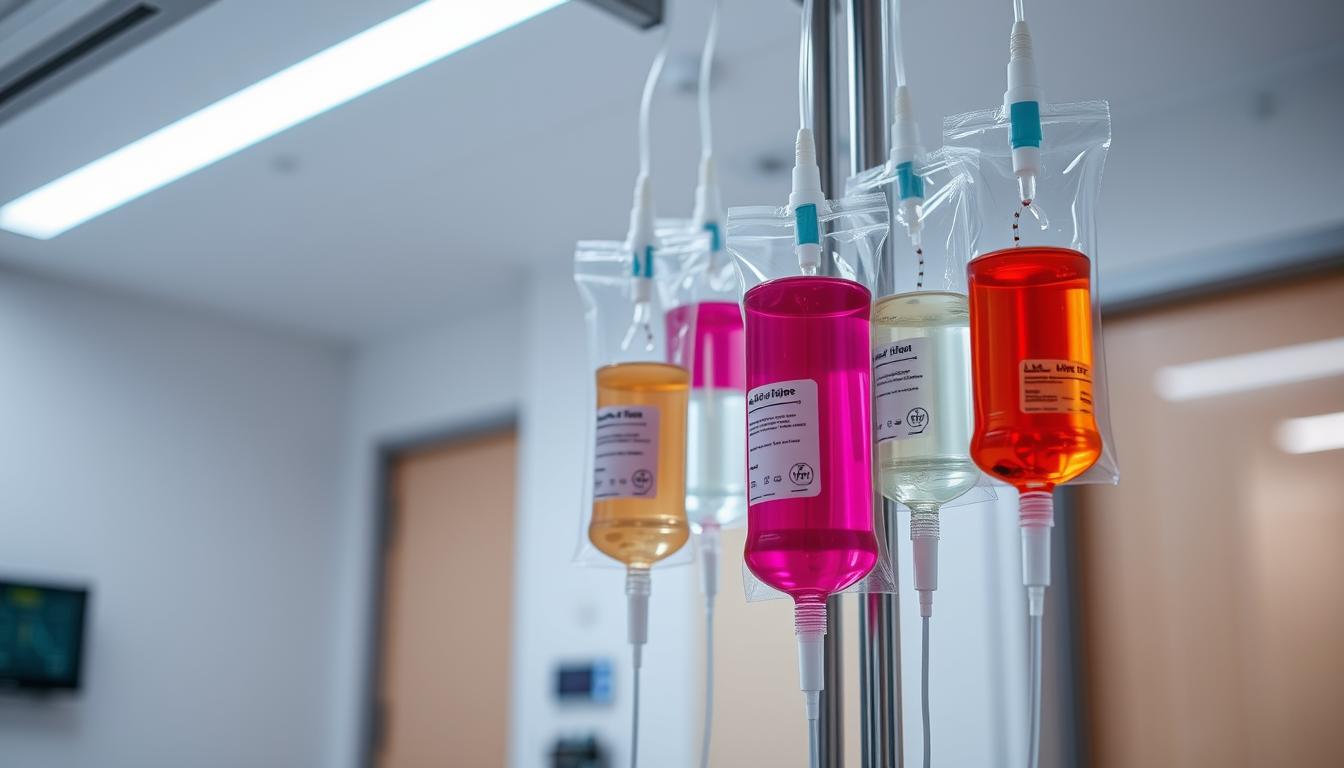
Irrigation solutions are sorted by their makeup and use. Sterile water and saline are often used for irrigation. Antimicrobial solutions are used to stop infections.
Healthcare professionals need to know about infusion and irrigation solutions. This knowledge helps them give the best care and treatment to patients. By choosing the right solutions, they can avoid complications and ensure the best outcomes for patients.
Shop IV Flush Solution
Quality Standards and Compliance in IV Solutions
Ensuring quality standards in IV solutions is key for patient safety and treatment success. Healthcare workers must follow strict compliance rules to ensure IV solutions are of high quality. The FDA checks IV solutions' production and distribution, setting strict rules to avoid contamination and keep them sterile.
To keep up with quality standards, healthcare places must follow proper storage and handling of IV solutions. This means using clean tools and sticking to set protocols for making and giving IVs. Compliance with these rules is vital to avoid bad reactions and make sure treatments work well.
- Regular check-ups of IV solution packaging and labels
- Storing them in a cool, dry place
- Using clean tools for making and giving IVs
By focusing on quality standards and compliance, healthcare workers can lower risks and give the best care to patients. It's very important to follow these rules because it directly affects patient safety and treatment results.
Healthcare places must stay careful in keeping up quality standards and compliance in IV solutions. This way, they can make sure they give top-notch care to their patients and keep their patients' trust.
| Regulatory Body | Role in IV Solution Quality Control |
|---|---|
| FDA | Oversees production and distribution, enforces guidelines for sterility and contamination prevention |
| Healthcare Facilities | Implement proper storage and handling procedures, ensure compliance with regulations |
Must Read: IV Flush Solution: Uses, Risks, Recalls, and Settlements
Clinical Applications of Infusion, Irrigation, and Flush Solutions
Infusion, irrigation, and flush solutions are key in healthcare. They are used in many places, like hospitals and clinics. The right IV solution is crucial for treating patients well. It depends on the patient's health, age, and weight.
In emergency rooms, flush solution is used to keep patients safe. It helps prevent problems and ensures care is effective.
Choosing the right IV solution is backed by research. It's important to use infusion pumps and watch how patients react to treatment. In surgeries, clinical applications of these solutions help keep patients hydrated and infection-free.
- Emergency departments, where quick and good treatment is needed
- Surgeries, to keep patients hydrated and prevent infections
- Long-term care, focusing on patient comfort and safety
- Outpatient treatments, where fast and effective care is key
In all these areas, clinical applications of these solutions are vital. They help healthcare professionals give the best care. By picking the right IV solution, they can improve patient care and results.
Shop now: Needles, Syringes & IV Supplies - IV Solutions
Conclusion: Selecting the Right IV Solutions for Your Healthcare Facility
Choosing the right IV solutions is key for patient safety and cost savings. It also ensures you meet all the rules. Look at the quality, reliability, and if they fit your healthcare needs.
Check out product reviews, clinical trials, and guidelines from the makers. Also, talking to experts and other healthcare workers can help. They share what works and what doesn't.
By picking the best IV solutions, you improve care and use resources wisely. Always put your patients first when picking IV solutions for your place.
Have a look: 8 Best Perinal Care Products in USA 2025
FAQ
Q. What are the different types of infusion solutions?
A. There are mainly three types of infusion solutions. These include crystalloids like saline and Ringer's solutions. There are also colloids like albumin and hydroxyethyl starch. Lastly, there are parenteral nutrition solutions.
Q. What are the classifications of irrigation solutions?
A. Irrigation solutions are mainly classified into three types. These are sterile water, saline, and other specialized solutions. They are used for cleaning and flushing wounds or body cavities.
Q. What are the requirements for flush solutions?
A. Flush solutions, like normal saline or heparin solutions, keep IV lines and catheters open. They need to be sterile, have the right pH, and be compatible with medications.
Q. How are infusion, irrigation, and flush solutions used in the emergency department?
A. In the emergency department, infusion solutions are used for fluid resuscitation and medication. They are also used for parenteral nutrition. Irrigation solutions clean wounds. Flush solutions keep IV lines open.
Q. What are the surgical applications of infusion, irrigation, and flush solutions?
A. In surgery, infusion solutions replace fluids and deliver medications. Irrigation solutions clean and irrigate surgical sites. Flush solutions keep IV lines and catheters open.
Q. How are infusion, irrigation, and flush solutions used in long-term care settings?
A. In long-term care, infusion solutions are used for hydration and medication. They are also used for parenteral nutrition. Irrigation solutions are used for wound care. Flush solutions keep IV lines and catheters open.
Q. What are the outpatient treatment protocols for infusion, irrigation, and flush solutions?
A. Outpatient treatment may use infusion solutions for hydration and medication. They are also used for parenteral nutrition. Irrigation solutions are used for wound care. Flush solutions keep IV lines and catheters open.